Work surged; the week didn’t. As tech-heavy assignments spread across districts, MBMA didn’t need to replace expertise, it needed more trained hands alongside it, because delivery had shifted from paper plans to evidence-driven routines: GIS basemaps for planning, UAV imagery for verification, tighter procurement and finance compliance, monitoring that holds up to review, and documentation that can move between blocks without being rebuilt. Field teams carried the craft; what stretched was bandwidth and continuity, and short, ad-hoc hires risked delays and lost institutional memory so the system needed a reliable second line, local, mentored, and ready to plug into live tasks on short notice.
In March 2022 MBMA launched the Apprenticeship Training Programme: a mentored pipeline of local youth trained on the tools projects use GIS and UAV remote sensing; Finance & Accounts and Procurement; Environment Management; Monitoring & Evaluation; IT/Data; Knowledge Management and deployed into live teams to keep delivery continuous and knowledge in-state.
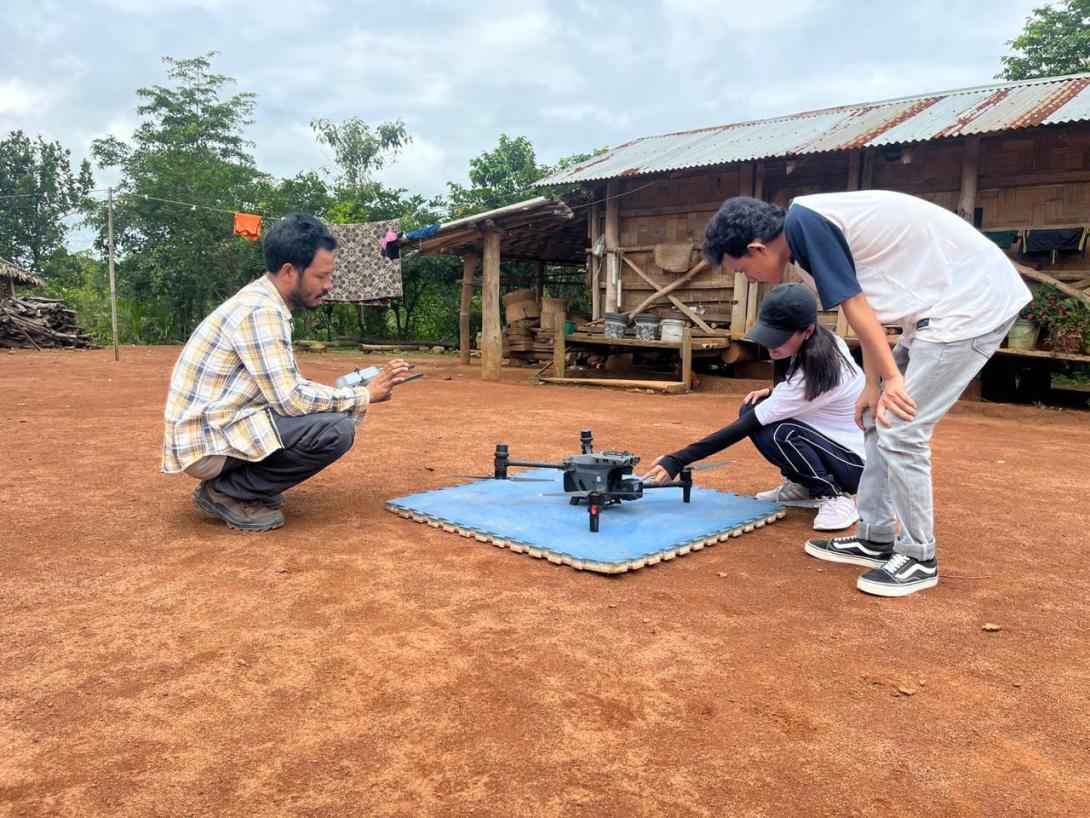
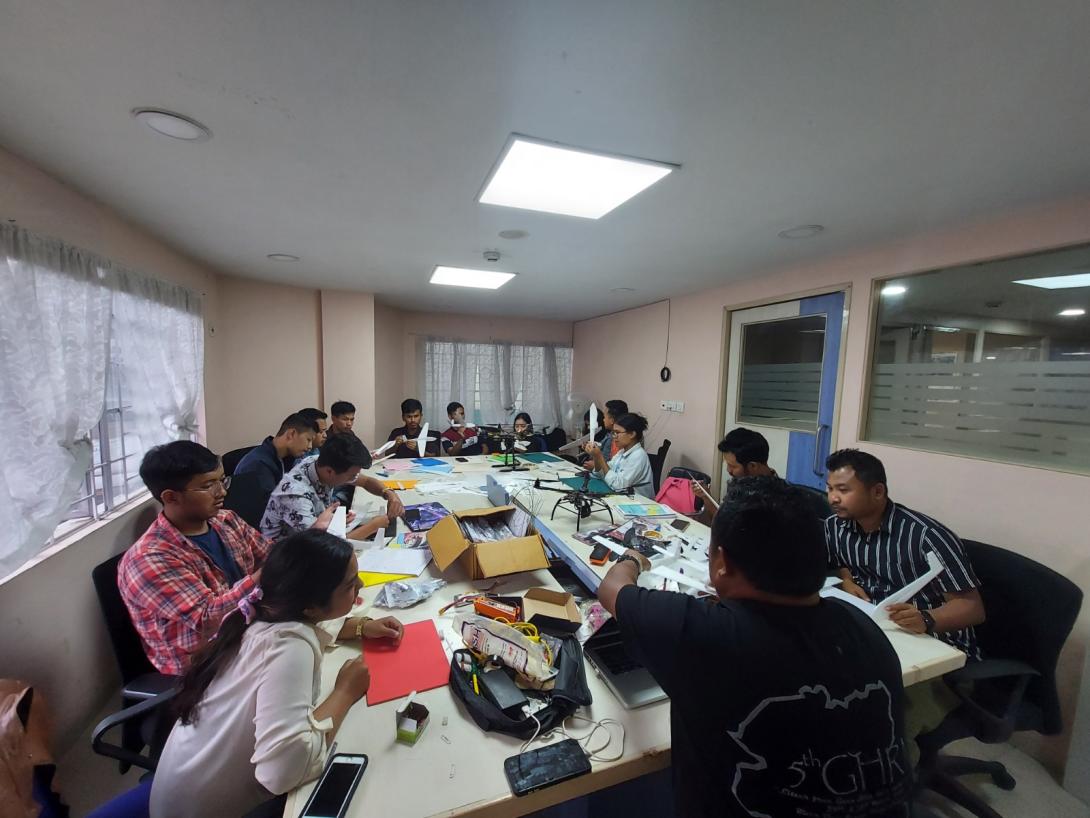
The entry gate is deliberately narrow. Applicants, residents of Meghalaya aged 18–26 move through screening, a written test, and an interview before stepping into three to twelve months of preparation. The curriculum mirrors where delivery pressure sits: mapping and verification, compliant movement of funds, field evidence that survives scrutiny, and information that travels intact between districts. From the first week, learning is tied to output map today and ground-truth tomorrow; raise a purchase order this week and reconcile it next; organise photos, coordinates, and consent so another team can use them without starting from zero. It is not classroom first and field later; it is field and desk in the same rhythm.
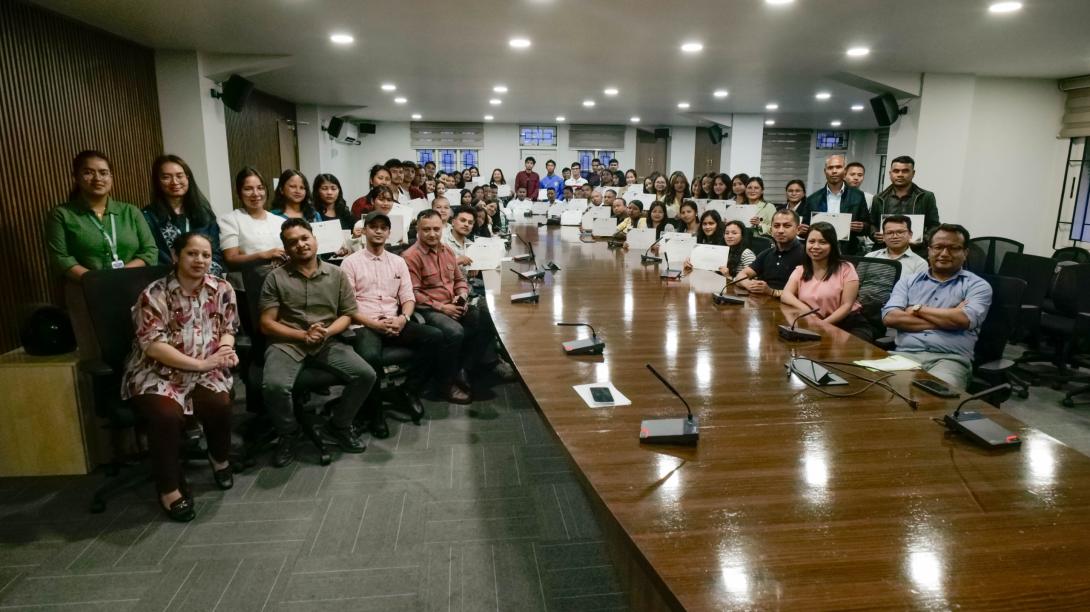
Nine batches in, the programme reads less like a course and more like a habit of work. Since March 2022 to January 2025, 222 apprentices have entered; 164 have completed; 58 are still in training. Of those who finished, 106 now hold full-time roles within MBMA capacity that stays in Meghalaya and carries careful practice with it. Others have moved into public agencies and technical organisations across the state, including the Public Works Department, Meghalaya Power Generation Corporation Ltd., Meghalaya State Watershed & Wasteland Development Agency, NEIGRIHMS, the North Eastern Space Applications Centre, Earthtree, Sauramandala Foundation, and Shah Technical Consultants.
What changes on the ground is quiet but decisive. A spring-recharge layer is signed off while the track is still walkable because satellite tiles and survey points meet cleanly the first time. A payment clears on schedule because the file arrives in sequence indent, quotes, approvals, delivery, payment without gaps. A village story lands with coordinates, captions, and consent, ready to drop into a district brief instead of being remade. None of this is theatrical; all of it shortens the distance between plan and proof.
The programme also checks its pulse. A structured survey went to all 222 apprentices and drew 209 responses (108 women, 101 men). Most described strong mentorship, relevant assignments, and extensive hands-on exposure. Many felt job-ready and said they would recommend the programme. A smaller group asked for stronger post-training placement support useful direction for the next iteration.
Absorption mirrors where workload is heaviest. The largest cohorts hired into MBMA come from GIS (36) and UAV Remote Sensing (18) turning intention and fieldwork into defensible spatial layers followed by Finance & Accounts (23) and Procurement (12), which keep books clean and purchases traceable. Smaller but essential intakes IT development (7), Environment Management (3), Data Analysis (3), Knowledge Management (2), Monitoring & Evaluation (1), and IT-GIS (1) keep systems usable and lessons portable between blocks.
The state has reinforced this approach at system level. With the Meghalaya State GIS & UAV Centre opening on 22 December 2022, departments gained an in-state hub for time-sensitive geospatial tasks. Because a trained local pipeline already existed, the centre did not begin with empty chairs; operators could fly, process, and maintain shared datasets from day one, reducing reliance on outside schedules
Why apprenticeships here, and why now? Meghalaya’s terrain, monsoon, and community-led governance demand evidence that is both precise and portable maps that a village can recognise and a reviewer can defend, files that move correctly the first time, monitoring that shows change rather than promising it. As externally aided projects scaled and became more technical, the bottleneck was not talent quality but the tempo of applied delivery across multiple districts at once. A field-first apprenticeship solves for tempo: it builds a bench that knows the ground, shares the language, and can drop into the week without a learning curve.
And after the apprenticeship? Crucially, it is designed to end in work. Many graduates step directly into MBMA roles; others move to allied departments and technical employers across the state. In both cases, they carry forward the muscle memory that keeps delivery moving defensible data, clean files, on-time closure. For those still in training or not yet placed, the next set of improvements is practical and already scoped: deeper industry partnerships to widen pathways, a focused placement desk, broader access to advanced UAV platforms and high-end GIS, regular updates for AI-enabled analysis and climate-risk workflows, and continued emphasis on the soft-skill spine clear writing, steady stakeholder conversations, and project management that keeps evidence usable.
The original problem hasn’t changed: weeks are short, terrain is demanding, and projects ask for proof. The Apprenticeship Training Programme extends not substitutes the expertise already in place. Trained local hands, mentored and in motion, keep the chain between plan and proof intact so maps land on time, purchases trace cleanly, payments move, and evidence crosses Meghalaya’s hills from one week to the next.