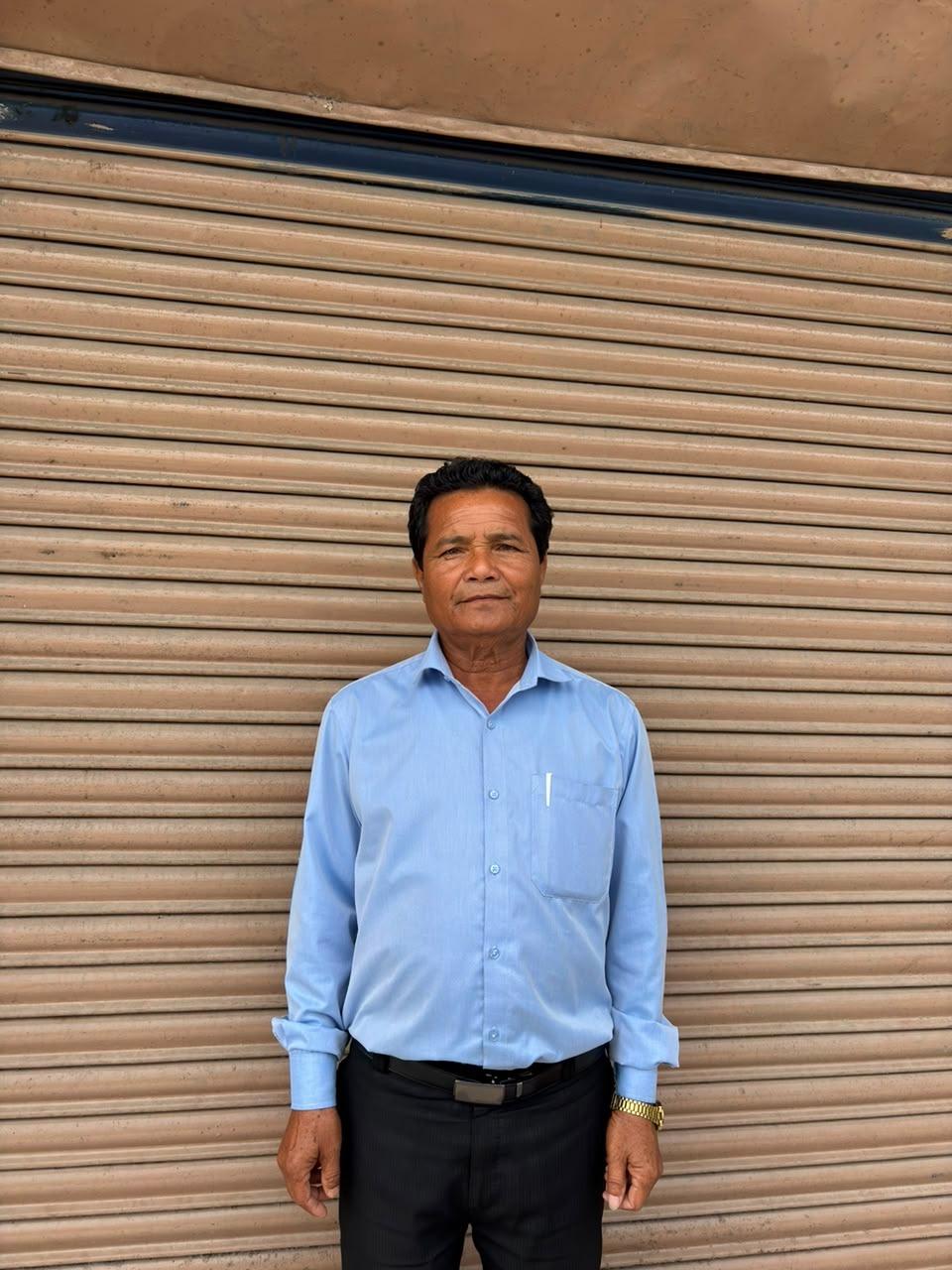
At the noisy coal depots of Jaintia Hills in the late 1970s, a young man stood between miners and Assamese traders, translating hurried conversations. He had no coal trucks of his own, no stake in the business. What he had was the ability to speak Hindi, and that made him useful as a mediator. This was Gregorius Dhar, a boy who had once dreamed of protecting forests but now found himself hustling to earn enough to support his family.
Gregorius was born on 1st March 1961 in Ghilimukh, Assam, though his family’s roots were in Padu village, East Jaintia Hills. His childhood was marked by turbulence. He saw the Bangladesh–Pakistan war unfold across the border, and later floods washed away his family’s fields. They survived for months on wild litchis they could gather and sell in markets. From these struggles, Gregorius learned early what it meant to start again after loss.
School was another hurdle. When he failed his matriculation exams, it felt like the world had shut its doors. “I didn’t want to be a burden,” he recalls. So he stepped out to work. The coal business gave him his first income as a translator. Later, in a pharmacy, he learned discipline — reporting on time, keeping records, and serving customers. Each small job shaped him in ways he did not yet see.
When a vacancy opened in the Forest Department in 1981, Gregorius applied alongside his friends. He had little education, spoke broken English, but he carried himself with humility and quiet confidence. His punctuality and sincerity left an impression. On 9th February that year, he joined as a Forest Guard — fulfilling the dream planted in his heart as a boy watching trees fall around his village.
The years ahead tested him. He served in Khliehriat, Jowai, Saphai, Umkiang, and even the far-flung Garo Hills. His work meant patrolling boundaries, raising nurseries, and often facing smugglers. There were nights when he returned home bruised, but he never once stepped away from his duties. Colleagues remember his discipline most of all — Gregorius was always on time, always precise, always giving his full effort.
In 2001, during a year-long training in Rongjeng, he found himself the least formally educated among his batch. Yet he stood out — passing in first division and earning six merit certificates. It was proof that dedication, not degrees, defined him.
He retired in 2019 as Forester Grade I, closing nearly four decades of service. Many thought his story ended there. But Gregorius wasn’t ready to stop. In 2023, when a colleague shared an advertisement for the MegLIFE project, he applied immediately. Partly to support his family, but mostly because he still felt called to serve the forests.
MegLIFE gave him a new kind of work. No longer patrolling against encroachers, he was now mobilising communities. At first, villagers misunderstood MegLIFE as just another government scheme. Some resisted its rules. But Gregorius persisted. He attended meeting after meeting, speaking calmly, explaining why conserving forests meant securing their water, their soil, their future. Slowly, suspicion turned into cooperation. Villages began rehabilitating barren lands, planting trees, and joining hands with DPMU and BPMU teams.
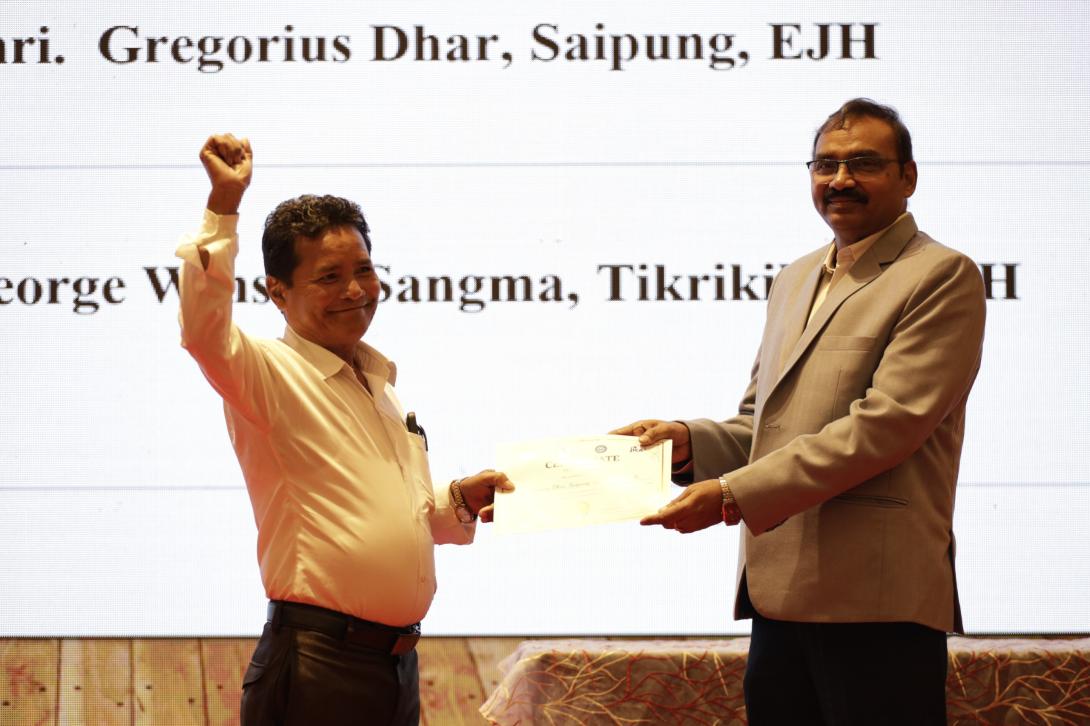
In 2025, his lifetime of discipline and commitment was recognised at the annual MegLIFE awards, where he received the Best Forester Award. For the boy who once failed his exams and worked odd jobs just to survive, it was a moment of quiet redemption. Standing on stage, he thought of the coal depots, the pharmacy counter, the uniform he once feared he would never wear. True to his nature, he only said: “Discipline and teamwork — that is all.”
“The need of the hour,” he says, “is for our people to come forward and work together for fresh air, clean water, and a better Meghalaya. I have seen our forests change from better to worse in my lifetime. Now is the time to act.”
Today, Gregorius Dhar remains as committed as ever. He says he will continue working for the environment for as long as his health allows. His journey — from a boy who once felt crushed by failure to a man who has given a lifetime to the forests — is a reminder that true service does not end with retirement. It continues, quietly and resolutely, through passion, discipline, and the will to keep moving forward.